
Medical & Costs
Muay Thai Injuries & Thailand Hospital Costs: Staph, Broken Ribs & Emergency Care
A realistic guide to medical bills in Thailand. Outpatient costs, emergency room fees, private vs public facilities, and how insurance claims actually get paid.
Minor outpatient injuries in Thailand are affordable to pay out of pocket, but major trauma or surgical hospitalisation can easily bankrupt an uninsured traveller. Knowing when to pay cash vs when to activate your insurer's Guarantee of Payment (GOP) saves crucial time in an emergency.
- Minor Clinic Visits (Staph, Stitches, Minor Sprains): 1,500 to 5,000 THB (£35–£115 / €40–€135). Usually faster to pay out-of-pocket and claim reimbursement.
- Emergency Room X-Rays & Fractures: 5,000 to 18,000 THB at private hospitals; 1,500 to 4,000 THB at government hospitals.
- Major Inpatient Surgery (ACL Reconstruction, Internal Fixation, ICU): 250,000 to 800,000+ THB (£6,000–£20,000+ / €7,000–€22,000+). Requires immediate insurance GOP clearance.
- Direct Billing: Only available for inpatient emergency hospitalisation. Outpatient care operates on a "pay-and-claim" basis under both Genki and True Traveller.
1. The Healthcare Reality for Combat Sports in Thailand
Thailand boasts some of the highest-rated medical facilities in Asia. The doctors and nurses are exceptionally well-trained, and diagnostic imaging equipment (CT scans, MRIs, digital X-rays) is widely accessible.
However, healthcare in Thailand is not free for foreign visitors. Unlike the NHS in the UK or socialised healthcare in Europe, every bandage, IV bag, consultation minute, and antibiotic tablet carries an itemised fee. If you walk into a private international facility, the cashier will ask for a credit card swipe or insurance policy confirmation before you are moved to a ward.
2. Typical Muay Thai Injuries & Treatment Costs
Over years of hosting students from across the globe at Khao Lak Muay Thai, we have seen almost every type of combat injury. Here is a breakdown of what treatment actually costs in current Thai Baht:
| Injury Type | Typical Clinical Treatment | Public Hospital (Takua Pa) | Private Hospital (Phuket) |
|---|---|---|---|
| Staph / Skin Infection | Wound debridement, culture, oral course of amoxicillin-clavulanate or clindamycin | 600 – 1,500 THB | 2,500 – 6,000 THB |
| Severe Cellulitis (IV) | 2–3 nights inpatient IV antibiotics, blood monitoring | 8,000 – 18,000 THB | 45,000 – 95,000 THB |
| Facial Laceration | Local anaesthetic, 3–6 sutures, tetanus booster, dressings | 800 – 2,000 THB | 4,500 – 12,000 THB |
| Broken Rib / Floating Rib | Chest X-rays (2 views), physician exam, pain medication | 1,200 – 2,800 THB | 6,000 – 16,000 THB |
| Severe Ligament Tear (ACL) | MRI scan, arthroscopic reconstructive surgery, 3-day admission | 60,000 – 120,000 THB | 280,000 – 550,000 THB |
| Emergency Medevac | Critical ground / air transport to specialist surgical centre | Variable | 150,000 – 1,000,000+ THB |
3. Public vs Private Hospitals: Navigating Care in Phang Nga & Phuket
Students training in the Khao Lak area generally have access to two tiers of medical infrastructure:
1. Takua Pa Hospital (Government / District Facility)
Located roughly 25 minutes north of Khuekkhak, Takua Pa Hospital is the main public hospital serving this district. It has dedicated doctors, an active 24/7 emergency unit, and X-ray capabilities.
- Pros: Very low cost; excellent trauma stabilization; emergency staff see motorcycle and agricultural accidents daily.
- Cons: High patient volumes; long wait times (often 2–4 hours); administrative staff rarely speak fluent English; itemised insurance receipts must often be translated; private rooms are rarely available.
2. Bangkok Hospital Phuket & BDMS Network (Private International)
Located approximately 80 to 90 minutes south of Khao Lak in Phuket City, Bangkok Hospital Phuket is an internationally accredited (JCI) tertiary hospital with a specialised Sports Medicine and Orthopaedic Institute.
- Pros: World-class orthopaedic surgeons; multi-lingual international insurance coordination desk; direct billing agreements with global underwriters; luxury private recovery rooms.
- Cons: High prices; tests and medications are billed at significant mark-ups; emergency admissions without pre-authorisation require a large credit card hold (often 50,000 to 100,000 THB).
4. How Outpatient "Pay-and-Claim" Works
Ninety percent of visits to a clinic—treating a skin infection, getting stitches in an eyebrow, or obtaining an X-ray to rule out a fracture—are classified as outpatient care.
Neither Genki nor True Traveller runs direct billing with small beachside clinics. When you receive outpatient treatment:
- You settle the bill at the hospital cashier using your own debit/credit card or cash.
- Crucial Step: Before leaving the cashier desk, request:
- The official Medical Certificate written in English, clearly stating the diagnosis and treating physician's licence number.
- An itemised receipt (Receipt & Invoice) detailing pharmacy costs, doctor fees, and laboratory/imaging charges.
- Upload photos or PDF scans of these documents to your insurer’s claims portal online.
- Your claim is processed against your policy deductible (e.g. €50 per case on Genki Traveler) and reimbursed directly to your bank account.
5. Inpatient Emergencies and the Guarantee of Payment (GOP)
If you suffer a catastrophic injury—such as a complex compound fracture, organ trauma from a vehicle crash, or severe concussion requiring neuro-observation—you will be admitted as an inpatient.
When inpatient admission occurs:
- Present your insurance policy certificate to the hospital's International Services department immediately.
- Call your insurer's 24/7 Emergency Assistance hotline (printed on your policy validation card).
- The assistance company will liaise directly with the hospital's billing team to issue a Guarantee of Payment (GOP). Once issued, the hospital bills the insurer directly up to your policy maximum (£10,000,000 on True Traveller, or €1,000,000 on Genki Traveler).
6. What About Physiotherapy and Dental Treatment?
Combat sports place immense wear and tear on joints and teeth. It is vital to note how policies handle auxiliary treatments:
Genki Traveler: Includes up to €1,000 for emergency dental pain relief and accident-related dental repair. It also covers up to six prescribed physiotherapy sessions per injury case. Routine dental work or ongoing long-term athletic rehabilitation is excluded.
True Traveller: Emergency dental treatment to natural teeth resulting from a direct blow is covered up to specified limits under the medical section. Routine check-ups or pre-existing joint deterioration are not covered.
7. Actionable Medical Preparedness Checklist
To ensure a smooth experience should you need medical attention during your training camp:
- Hygiene is your first defence: Shower with antibacterial soap immediately after every training session. Wash hand wraps and rashguards daily. Disinfect cuts immediately with Betadine (available at any 7-Eleven in Thailand for 25 THB).
- Carry a high-limit credit card: Keep an active credit card with at least £1,500 / €2,000 available credit for emergency hospital deposits while GOP approvals are verified.
- Save hospital locations offline: Save Takua Pa Hospital and Bangkok Hospital Phuket on Google Maps or Apple Maps before you travel.
- Don't hide injuries: If an elbow hyperextension or rib kick is causing persistent sharp pain or difficulty breathing, visit a clinic promptly. Treating an infection or hairline crack early prevents expensive hospitalisations later.
Frequently Asked Questions
Hospital Costs FAQ
How much does it cost to treat staph infection in Thailand?
Outpatient treatment for minor staph or cellulitis at a local clinic usually costs 1,500 to 4,000 THB (£35 to £90) for consultation, oral antibiotics, and wound dressings. Severe cases requiring IV antibiotics and overnight hospital observation at a private facility can cost 30,000 to 80,000 THB.
What does a broken rib or fracture cost at a Thai hospital?
A standard emergency room visit with chest X-rays, medical consultation, and painkillers at a private international hospital (such as Bangkok Hospital Phuket) ranges from 6,000 to 15,000 THB. At a government hospital like Takua Pa Hospital, the same visit typically costs 1,200 to 3,000 THB.
How does hospital payment work with travel insurance in Thailand?
For outpatient visits (under £300/€350), you almost always pay the hospital directly with cash or credit card, collect the itemised medical certificate and receipts, and submit a reimbursement claim online. For serious inpatient emergency admissions (surgeries or ICU), the hospital's international medical desk requests a direct Guarantee of Payment (GOP) from your insurer.
Does Genki Traveler have an emergency deductible?
Genki Traveler carries a standard deductible of €50 per claim on its active policy wording. You pay the first €50, and approved medical costs above that figure are covered up to €1,000,000.
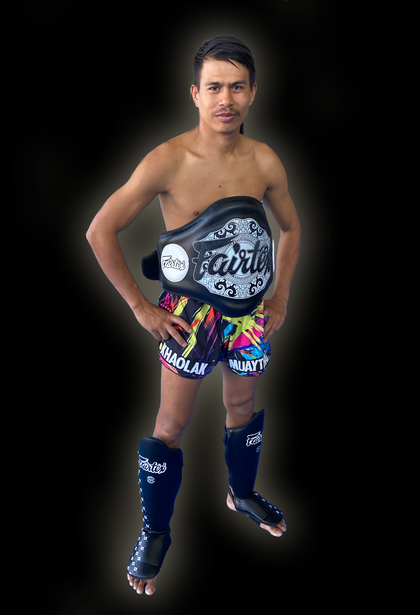
Published by Khao Lak Muay Thai & Muay Boran
Our camp is located in Khuekkhak, Phang Nga, Thailand. We have assisted hundreds of fighters with safe training and local medical guidance. Always review policy terms directly with your underwriter.